
EBL Solar AA Rechargeable Batteries (12-Pack, 1300mAh) Review: A Practical Upgrade for Garden and Pathway Lights
This review looks at the EBL Solar AA Rechargeable Batteries (12-pack, 1300mAh NiMH, 1.2V), designed specifically for outdoor solar lights and garden fixtures. It covers their capacity and performance, ideal use cases, durability, environmental benefits, and key limitations. The article also highlights who will benefit most from these cells, offers pros and cons, and suggests a few alternative battery categories if you need higher capacity or broader device compatibility.
Product Summary
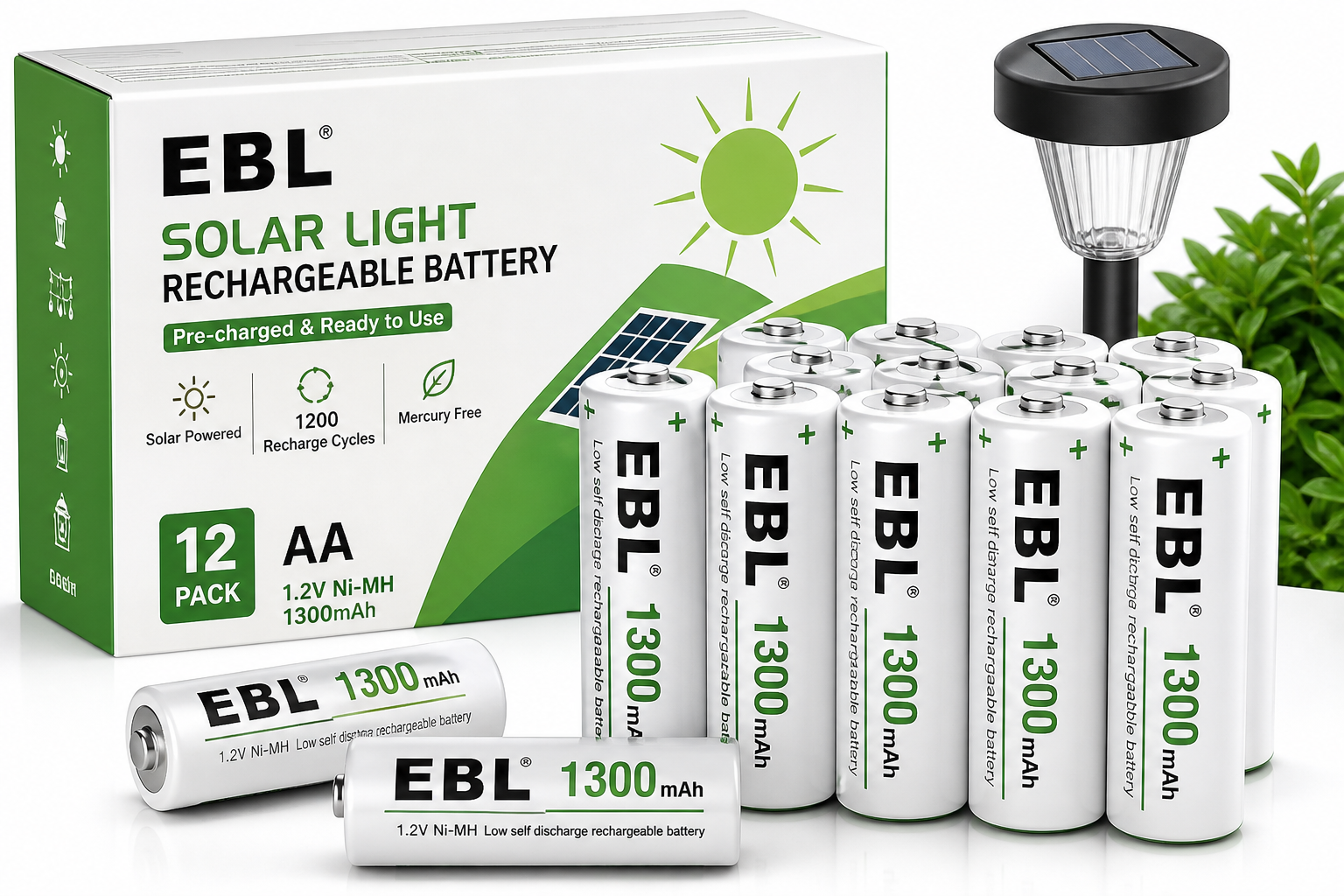
The EBL Solar AA Battery Rechargeable Batteries for Solar Lights (12 Pack) is a set of AA-size, 1.2V NiMH cells with a rated capacity of 1300mAh, marketed primarily for outdoor solar garden, pathway, and string lights. They come pre-charged, are mercury-free, and are rated for up to 1200 recharge cycles, making them a reusable alternative to disposable alkaline batteries.
On paper, these batteries strike a middle ground: higher capacity than very basic solar-light cells (often 600–1000mAh), but not as high as premium general-purpose AA NiMH batteries intended for cameras or high-drain gear. Instead, they are tuned for the relatively low, nightly discharge cycles typical of solar landscape lighting.
From a value standpoint, the 12-pack format at around $9.49 makes it easy to refresh an entire set of garden lights or keep spares on hand for seasonal decorations.
Target Users
These EBL AA solar batteries are best suited for:
- Homeowners with solar garden/path lights who want to replace failing NiCd or low-capacity NiMH cells in existing fixtures.
- Users of solar string lights and decorative lanterns that run for a few hours every evening and recharge daily from a small panel.
- People looking to cut down on disposable alkaline waste and move to a rechargeable option in low-to-moderate drain outdoor devices.
- DIY solar hobbyists who need a consistent, modest-capacity AA NiMH option for simple solar projects.
They are less ideal if you mainly need AAs for:
- High-drain electronics (flash units, game controllers, cameras).
- Devices that expect 1.5V alkaline cells and are sensitive to the lower 1.2V of NiMH.
Main Benefits
Optimized for Solar Lights
Solar garden and pathway lights typically come with low-cost NiCd or NiMH cells, often in the 400–800mAh range. Upgrading to a 1300mAh NiMH cell can:
- Extend runtime into the night (assuming the solar panel itself gets adequate sun).
- Reduce how quickly lights dim as the night progresses.
- Lower the frequency of battery replacement compared to cheap bundled cells.
Long Cycle Life and Reusability
EBL rates these batteries for up to 1200 cycles under ideal conditions. In practical terms, for daily solar charging and discharging:
- Even if real-world cycles are somewhat lower, you’re still looking at years of service for outdoor lights.
- The cells use NiMH chemistry, which is more environmentally friendly than older NiCd, particularly in terms of heavy metal content.
Pre-Charged and Low Self-Discharge
The pack arrives pre-charged, so you can drop cells directly into compatible lights or devices and expect them to work out of the box. Low self-discharge NiMH technology generally means:
- They retain a substantial portion of their charge when left unused for months.
- They are more forgiving for seasonal use (e.g., holiday string lights or occasional use garden decor) than older-generation NiMH that drain quickly in storage.
Mercury-Free and Safer Chemistry
These batteries are described as mercury-free and built on NiMH rather than lead or cadmium-based chemistries, which is beneficial for:
- Reduced environmental impact at end of life.
- Safer handling and disposal compared to NiCd.
Key Considerations
Before buying, keep the following in mind:
Capacity vs. Premium NiMH AAs
At 1300mAh, these are mid-capacity AA NiMH cells. Premium AA NiMH batteries for general-purpose use often advertise 1900–2500mAh or more. In practice:
- For solar garden lights, 1300mAh is usually sufficient and may even be closer to the charging ability of the small solar panels.
- For high-drain electronics, you will likely want higher-capacity NiMH cells.
1.2V vs. 1.5V Behavior
Like most NiMH AAs, these operate around 1.2V nominal (higher right off the charger, dropping under load). Many solar lights and devices are designed for 1.2V rechargeables, but:
- Some devices that expect 1.5V alkaline may show lower brightness or reduced runtime.
- Always confirm your device supports 1.2V NiMH cells before switching.
Performance Depends on the Solar Fixture
Replacing the batteries in very old or low-quality solar lights will not overcome:
- Cloudy or damaged solar panels.
- Poor-quality charge controllers.
- Inadequate sunlight due to placement.
In other words, new batteries can dramatically help if the old cells were worn out, but they can’t compensate for a badly designed or failing solar light.
NiMH Care and Charging
Although these are marketed for solar lights, they are still standard NiMH cells and benefit from reasonable care:
- Avoid mixing new and old cells in the same series string.
- If charging with a separate NiMH charger, use a modern smart charger with proper termination.
- Keep them within recommended temperature ranges, especially in very hot climates, to prolong cycle life.
Pros
- Purpose-built for solar applications: Capacity and chemistry well matched to small solar panels and nightly cycling.
- 1300mAh rating: A good step up from the 600–1000mAh cells shipped with many budget garden lights.
- Long cycle life (up to 1200 cycles) under ideal conditions, supporting years of reuse.
- Pre-charged and low self-discharge, so they’re ready to use and hold charge reasonably well during storage.
- Mercury-free NiMH chemistry, which is more eco-conscious than many disposable options.
- 12-pack quantity is convenient for refreshing an entire yard’s worth of lights in one purchase.
- Typically available at a competitive pack price (around $9.49), which is reasonable given the capacity and quantity.
Cons
- Not a high-capacity general-purpose AA: 1300mAh is modest versus premium 1900–2500mAh NiMH cells.
- Not ideal for high-drain electronics like camera flashes, game controllers, or powerful flashlights.
- Performance is tied to the quality of your solar fixtures; weak or poorly placed panels can still result in short nighttime runtimes.
- As with many budget NiMH brands, real-world capacity can be slightly lower than the rated figure depending on charging conditions and testing methods.
- Temperature extremes (very hot summers or freezing winters) will reduce performance and shorten life, which is inherent to most NiMH cells.
Alternatives
If you like the idea of rechargeable AAs for solar lights but are unsure whether this exact pack is right for you, consider the following categories of alternatives:
1. Higher-Capacity NiMH AA Batteries
General-purpose NiMH AAs in the ~1900–2500mAh range provide longer runtime per charge, particularly in higher-drain devices. They can be used in solar lights if:
- Your solar panel and charge circuit can handle the higher capacity.
- You are willing to invest a bit more per cell.
These are better for mixed use (indoor devices + some solar lights) but are often more expensive than the EBL solar-focused pack.
2. Other Solar-Specific NiMH Packs
Some brands offer AA NiMH cells explicitly labeled for solar garden lights with similar 1000–1300mAh ratings. Compared with the EBL pack, these may offer:
- Slightly different capacity/price trade-offs.
- Different cycle-life ratings or packaging sizes (e.g., 8-pack vs 12-pack).
If you only have a few fixtures, a smaller pack might be more efficient.
3. Sticking With Disposable Alkaline (Short Term)
While not recommended from an environmental or long-term cost perspective, alkaline AAs can sometimes be used (if the fixture supports them):
- They start at 1.5V, which can be advantageous in some lights.
- They require regular replacement and generate more waste.
Rechargeable NiMH is generally the better long-term choice for frequently cycled solar lights.
Conclusion
The EBL Solar AA Rechargeable Batteries (12 Pack, 1300mAh NiMH, 1.2V) are a practical, purpose-built option for refreshing or upgrading the power source in outdoor solar lights, garden stakes, and decorative string lights. They offer a meaningful capacity bump over many stock cells, a sensible balance between runtime and solar-charging compatibility, and a long rated cycle life that can significantly cut down on battery waste.
If you need affordable, mid-capacity rechargeable AAs optimized for daily solar charging, and your primary goal is to keep garden or pathway lights glowing reliably through the evening, this pack represents solid value at roughly $9.49. Users seeking maximum capacity for power-hungry devices, however, may want to look at higher-capacity NiMH alternatives and reserve these EBL cells mainly for their intended solar-light niche.